
Unlocking the World of Custom 3D Printing
Updated: Sep 19
The world of 3D printing has evolved dramatically over the past decade, transforming from a niche technology into a mainstream tool that empowers creativity and innovation. Custom 3D printing offers individuals and businesses the ability to create unique, tailored products that meet specific needs. Whether you are an artist, engineer, or hobbyist, understanding the potential of custom 3D printing can unlock new opportunities for design and production.
What is Custom 3D Printing?
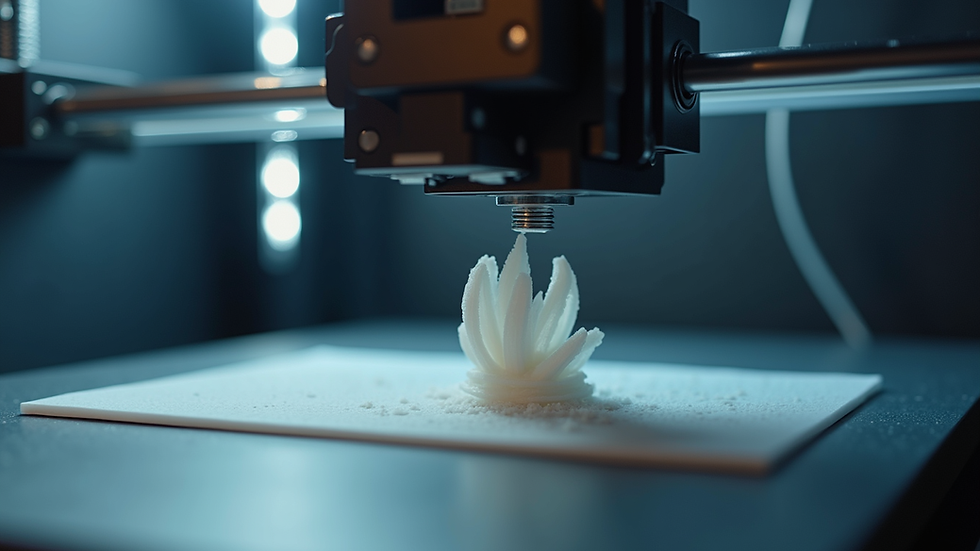
Custom 3D printing refers to the process of creating three-dimensional objects from digital files. This technology allows for the production of complex shapes and structures that would be difficult or impossible to achieve with traditional manufacturing methods. The process typically involves the following steps:
Design: Using computer-aided design (CAD) software, users create a digital model of the object they wish to print.
Slicing: The digital model is then sliced into thin horizontal layers using slicing software, which prepares it for printing.
Printing: The 3D printer builds the object layer by layer, using materials such as plastic, resin, or metal.
Post-Processing: After printing, the object may require finishing touches, such as sanding, painting, or assembly.
Benefits of Custom 3D Printing
Custom 3D printing offers numerous advantages over traditional manufacturing methods:
Flexibility: Designers can easily modify their models to create variations without the need for expensive molds or tooling.
Cost-Effectiveness: For small production runs or one-off items, 3D printing can be more economical than traditional methods.
Speed: Rapid prototyping allows for quicker iterations and faster time-to-market for new products.
Personalization: Custom 3D printing enables the creation of personalized items, from jewelry to medical devices tailored to individual needs.
Applications of Custom 3D Printing
The versatility of custom 3D printing has led to its adoption across various industries. Here are some notable applications:
1. Healthcare
In the medical field, custom 3D printing is revolutionizing patient care. Surgeons can create patient-specific models for pre-operative planning, improving surgical outcomes. Additionally, custom prosthetics and implants can be designed to fit the unique anatomy of each patient, enhancing comfort and functionality.
2. Automotive
The automotive industry utilizes custom 3D printing for rapid prototyping and manufacturing of parts. Companies can produce lightweight components that improve fuel efficiency and performance. For example, Ford has used 3D printing to create prototypes of car parts, reducing development time significantly.
3. Fashion
Fashion designers are increasingly turning to custom 3D printing to create unique garments and accessories. This technology allows for intricate designs that would be challenging to produce using traditional methods. Brands like Iris van Herpen have showcased stunning 3D-printed dresses on the runway, pushing the boundaries of fashion.
4. Architecture
Architects use custom 3D printing to create detailed scale models of their designs. This allows for better visualization and communication of concepts to clients. Moreover, some firms are exploring the possibility of 3D printing entire buildings, which could revolutionize construction methods.
5. Education
Educational institutions are incorporating custom 3D printing into their curricula, allowing students to engage in hands-on learning experiences. From engineering to art classes, students can design and print their projects, fostering creativity and innovation.
Choosing the Right 3D Printing Technology
When venturing into custom 3D printing, it’s essential to understand the different technologies available. Here are some common methods:
Fused Deposition Modeling (FDM)
FDM is one of the most widely used 3D printing technologies. It works by melting thermoplastic filament and extruding it layer by layer to create an object. FDM printers are relatively affordable and easy to use, making them popular among hobbyists and educators.
Stereolithography (SLA)
SLA uses a laser to cure liquid resin into solid layers. This method produces high-resolution prints with smooth surfaces, making it ideal for detailed models and prototypes. However, SLA printers can be more expensive and require post-processing to remove excess resin.
Selective Laser Sintering (SLS)
SLS uses a laser to fuse powdered materials, such as nylon or metal, into solid objects. This technology allows for complex geometries and is often used in industrial applications. SLS prints do not require support structures, making it easier to create intricate designs.
Digital Light Processing (DLP)
DLP is similar to SLA but uses a digital light projector to cure resin. This method can produce high-quality prints quickly, making it suitable for applications requiring speed and precision.
Materials Used in Custom 3D Printing
The choice of material plays a crucial role in the final product's quality and functionality. Here are some common materials used in custom 3D printing:
PLA (Polylactic Acid): A biodegradable thermoplastic that is easy to print and available in various colors. PLA is ideal for beginners and non-functional prototypes.
ABS (Acrylonitrile Butadiene Styrene): A durable plastic commonly used in functional parts. ABS is more challenging to print than PLA but offers better strength and heat resistance.
PETG (Polyethylene Terephthalate Glycol): A strong and flexible material that combines the ease of printing of PLA with the durability of ABS. PETG is suitable for functional prototypes and end-use parts.
Resin: Used in SLA and DLP printing, resin materials can produce highly detailed prints. They are available in various formulations, including flexible, tough, and castable resins.
Getting Started with Custom 3D Printing
If you’re interested in exploring custom 3D printing, here are some steps to get started:
1. Learn the Basics
Familiarize yourself with 3D printing concepts, technologies, and software. Online courses, tutorials, and community forums can provide valuable insights.
2. Choose Your Equipment
Decide whether to invest in a personal 3D printer or utilize a local maker space or 3D printing service. For beginners, starting with an affordable FDM printer can be a good option.
3. Design Your Model
Use CAD software to create your 3D model. There are many free and paid options available, such as Tinkercad, Fusion 360, and Blender.
4. Prepare for Printing
Slice your model using slicing software, adjusting settings such as layer height, infill density, and print speed based on your printer and material.
5. Print and Post-Process
Once your model is sliced, start the printing process. After printing, you may need to clean, sand, or paint your object to achieve the desired finish.
Challenges in Custom 3D Printing
While custom 3D printing offers numerous benefits, it also presents challenges:
Quality Control: Ensuring consistent quality across prints can be difficult, especially with varying materials and printer settings.
Material Limitations: Not all materials are suitable for every application, and some may require specialized equipment.
Learning Curve: Mastering 3D design and printing can take time and practice, which may deter some users.
The Future of Custom 3D Printing
The future of custom 3D printing looks promising, with advancements in technology and materials continually expanding its possibilities. As the industry evolves, we can expect:
Increased Accessibility: As prices for 3D printers and materials decrease, more individuals and small businesses will be able to access this technology.
Sustainability: Innovations in biodegradable materials and recycling processes will make 3D printing more environmentally friendly.
Integration with Other Technologies: The combination of 3D printing with technologies like AI and IoT will lead to smarter manufacturing processes and enhanced design capabilities.
Conclusion
Custom 3D printing is a powerful tool that opens up a world of possibilities for creativity and innovation. By understanding its applications, technologies, and materials, you can harness the potential of this transformative technology. Whether you are looking to create unique products, improve existing designs, or explore new ideas, custom 3D printing can help you bring your vision to life. Embrace this exciting technology and start your journey into the world of custom 3D printing today!


Comments